Few sights are as joyful as a Garba circle in motion. As dancers clap, turn, and step together around a glowing centerpiece, the circle becomes more than a formation—it becomes a beautiful expression of devotion, community, and tradition.
Garba is a traditional dance from Gujarat, India, traditionally performed during Navratri, the Hindu festival dedicated to the worship of Shakti, or divine feminine energy. UNESCO describes Garba as a ritualistic and devotional dance performed around a lit earthen pot or an image of the goddess Amba. Dancers traditionally move counterclockwise, beginning with simple, measured movements before gradually building toward a faster, more energetic rhythm.
Why a Circle?
The circle is central to Garba’s identity. Traditionally, dancers move around a garbha deep—an earthen pot containing a lamp—or another symbolic representation of the divine. The light at the center represents life, energy, and the presence of the divine, while the dancers revolve around it in a continuous rhythm.
The circular pattern also reflects the cyclical nature of life and time. There is no permanent beginning or ending point in the circle, and everyone moves together as part of one shared flow. The arrangement creates a sense of equality: dancers stand alongside one another, connected by music and movement.
From Simple Steps to Spirited Movement
Garba often begins at a gentle pace. Dancers follow the beat with coordinated claps, side-to-side steps, graceful turns, and changing patterns. As the tempo increases, the circle becomes more dynamic, with dancers moving faster while maintaining the rhythm and spacing.
The beauty of Garba lies in its accessibility. Beginners can learn a few basic steps and join the circle, while experienced dancers can add expressive hand movements, spins, and intricate footwork. The shared rhythm makes the dance welcoming for children, adults, families, and first-time participants.
Large celebrations may feature multiple concentric circles, especially when many people gather. These circles can move in the same or opposite directions, creating a mesmerizing visual display of color, motion, and coordination.
Garba and Dandiya
Garba and Dandiya are often enjoyed together during Navratri, but they are distinct traditions. Garba typically emphasizes clapping and graceful rhythmic movement, while Dandiya Raas involves pairs of decorated wooden sticks. Gujarat Tourism notes that Ras Garba and Dandiya are sometimes combined in contemporary celebrations, bringing together different musical and dance traditions.
A Living Tradition Across North America
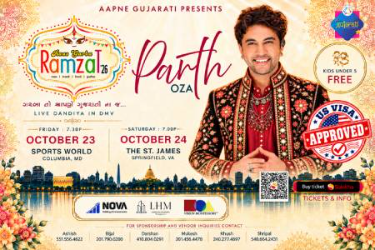
Today, Garba circles come alive at Navratri events across the US and Canada. Community halls, convention centers, outdoor grounds, and concert venues welcome dancers dressed in vibrant chaniya cholis, kediyus, and festive attire.
Whether the event is a traditional community gathering or a large live music celebration, the circle remains the heart of Garba. It connects generations, welcomes newcomers, and keeps Gujarati culture moving forward.
Ready to join the celebration? Browse upcoming Garba and Dandiya events across the US and Canada and book your tickets through Sulekha Events
(https://events.sulekha.com/navratri-dandiya-events-tickets)
Step into the circle, follow the beat, and experience the joy of Garba for yourself.











 Contest
